5. Enterprise development, supply chain and marketing practices

Negative and diminished perceptions of women and girls are one of the greatest barriers for gender equality. Advertising is a powerful driver to change perceptions and impact social norms – portraying women and men in modern, authentic and multidimensional roles. Companies can also influence business partners through inclusive supply chain policies and standards of engagement.

Enterprise development, supply chain and marketing practices

Suggested Actions

  • Require business partners, contractors and suppliers to adopt the WEPs.
  • Establish supplier diversity programmes that actively seeks to expand business relationships with women-owned enterprises and support them in access.
  • Offer women entrepreneurs, particularly those in the informal sector and MSME business owners, with training, mentorship, financing and procurement opportunities. 
  • Support gender-sensitive solutions to women’s barriers to accessing financial products and services.
  • Ensure that company products, services and facilities are not used for human trafficking and/or labour or sexual exploitation.
  • Remove harmful gender-based stereotypes in the workplace as well as in all media and advertising, and systematically depict women and men as empowered actors with progressive, intelligent and multi-dimensional personalities.
  • Regularly engage and consult with external stakeholders on their views, perspectives and needs.
     

Principle Resources

Family friendly policies during COVID

Document

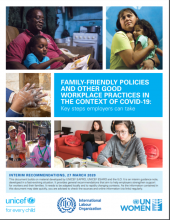
Family-Friendly Policies and Other Good Workplace Practices in the Context of COVID-19: Key Steps Employers Can Take

The consequences of the coronavirus disease (COVID-19) outbreak are unprecedented and felt around the world.

Author:ILO - UNICEF - UN Women

Publisher:ILO - UNICEF - UN Women

Date:

Category:COVID-19 Resource

Languages: English Turkish Japanese
Promoting positive gender roles in media

Document

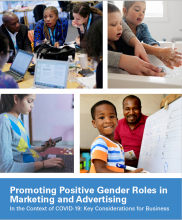
COVID-19: Promoting Positive Gender Roles in Marketing and Advertising

In an effort to address the impacts of COVID-19, companies are making a number of socially beneficial communications to the public. It is essential that these communications avoid harmful stereotypes and seek to depict positive and progressive gender portrayals.

Author:UNICEF - UN Women

Publisher:UNICEF - UN Women

Date:

Category:COVID-19 Resource

Languages: English Japanese Turkish
COVID19 and Ending VAW

Document

COVID-19 and Ending Violence Against Women and Girls

This brief highlights emerging evidence of the impact of the recent global pandemic of COVID-19 on violence against women and girls. It makes recommendations to be considered by all sectors of society, from governments to international organizations and to civil society organizations in orde

Author:UN Women

Publisher:UN Women

Date:

Category:COVID-19 Resource

Languages: English Japanese
COVID-19 Recovery Asia Pacific I

Document

Guidance Note for Action: Women as a Force for Accelerated and Inclusive Economic Recovery Post-COVID-19 in Asia-Pacific

Women’s economic empowerment will be essential if we are to ensure that the economic recovery from COVID-19 in Asia and the Pacific is as rapid as possible and includes all members of society.

Author:UN Women

Publisher:UN Women

Date:

Category:COVID-19 Resource

Language: English
DIR Tool

Document

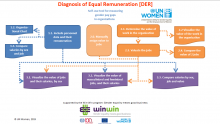
Diagnosis for Equal Remuneration

The Diagnosis for Equal Remuneration (DIR) is a new self-evaluation tool developed by UN Women for companies and organizations committed to equality.

Author:UN Women

Publisher:UN Women

Date:

Category:WEPs Guidance

Language: English
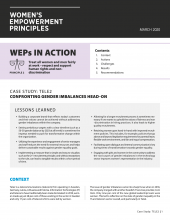
Confronting Gender Imbalances Head-on

Document

Confronting Gender Imbalances Head-on

Read this case study on Tele2, a European telecommunications company, to learn about the bold measures it took to improve gender balance at all levels of the organization.

Author:UN Women

Publisher:UN Women

Date:

Category:Case Study

Languages: English French