
Companies are increasingly expected to demonstrate real progress on gender equality. The WEPs Transparency & Accountability Roadmap is designed to help companies develop systems and structures to keep track of, drive and communicate their progress towards gender equality. In April 2026 the WEPs Secretariat and the Watch & Jewelry Initiatives 2030 organized sessions to introduce the WEPs Transparency & Accountability Roadmap so companies can start using the resource.
Organized by UN Women’s WEPs Secretariat together with the Watch & Jewelry Initiative and contributions by the UN Sustainable Stock Exchanges Initiative, the session introduced a practical roadmap designed to help companies embed gender equality into core business processes. The objective was to guide organizations in translating commitments into measurable, accountable, and transparent action.
See the full webinar recording here.
Why Measurement and Accountability Matter Now
A central theme of the discussion was the growing gap between commitment and execution. While many companies signal intent on gender equality, speakers highlighted that measurable change remains limited. Evidence shared during the webinar underscored persistent disparities, including low representation of women in leadership roles and gaps in workforce participation.
Iris Van der Veken emphasized that accountability systems—such as targets, incentives, and governance structures—are critical to converting policies into tangible outcomes. Without consistent measurement, organizations struggle to manage performance or identify risks related to inequality. From a business perspective, gender equality was positioned not only as a moral imperative but also as a driver of resilience, innovation, and financial performance.
Bridging Data Gaps and Reporting Challenges
A key challenge discussed was the inconsistency and fragmentation of gender-related data. Landon Wilcock highlighted that varying definitions and reporting practices across companies and jurisdictions make it difficult for investors to assess impact. This lack of standardization increases reporting burdens and reduces the usefulness of disclosed information.
The roadmap directly addresses this issue by aligning with existing global standards and focusing on comparable, decision-useful data.
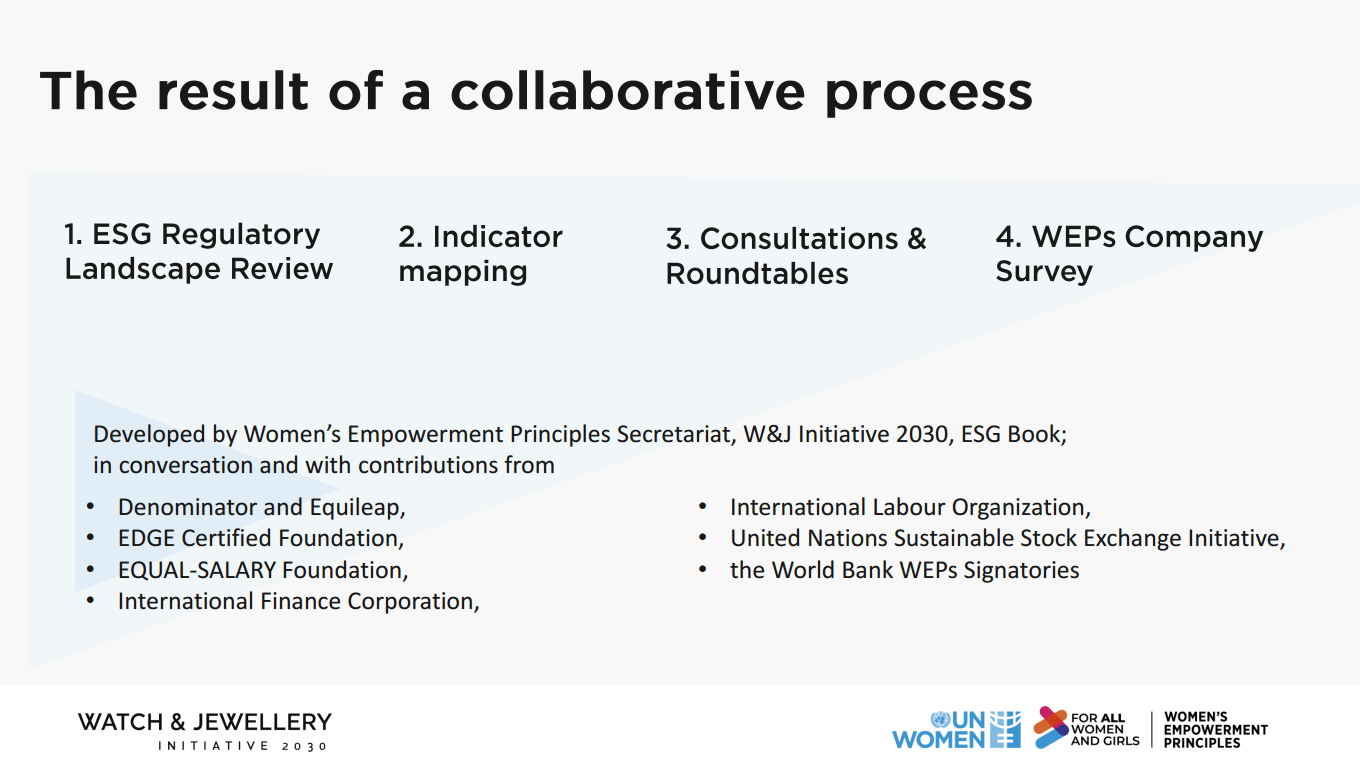
Mihwa Park explained that the roadmap was developed through an extensive process, including regulatory analysis, indicator mapping, and multi-stakeholder consultations. The result is a tool grounded in real-world business needs rather than theoretical principles.
A Practical, Maturity-Based Approach
The roadmap is structured around four maturity levels—beginner, improver, achiever, and leader—allowing companies to identify their current stage and progress incrementally. It also spans all WEPs pillars, including leadership, workplace, and marketplace, recognizing that progress can vary across different areas of business operations.
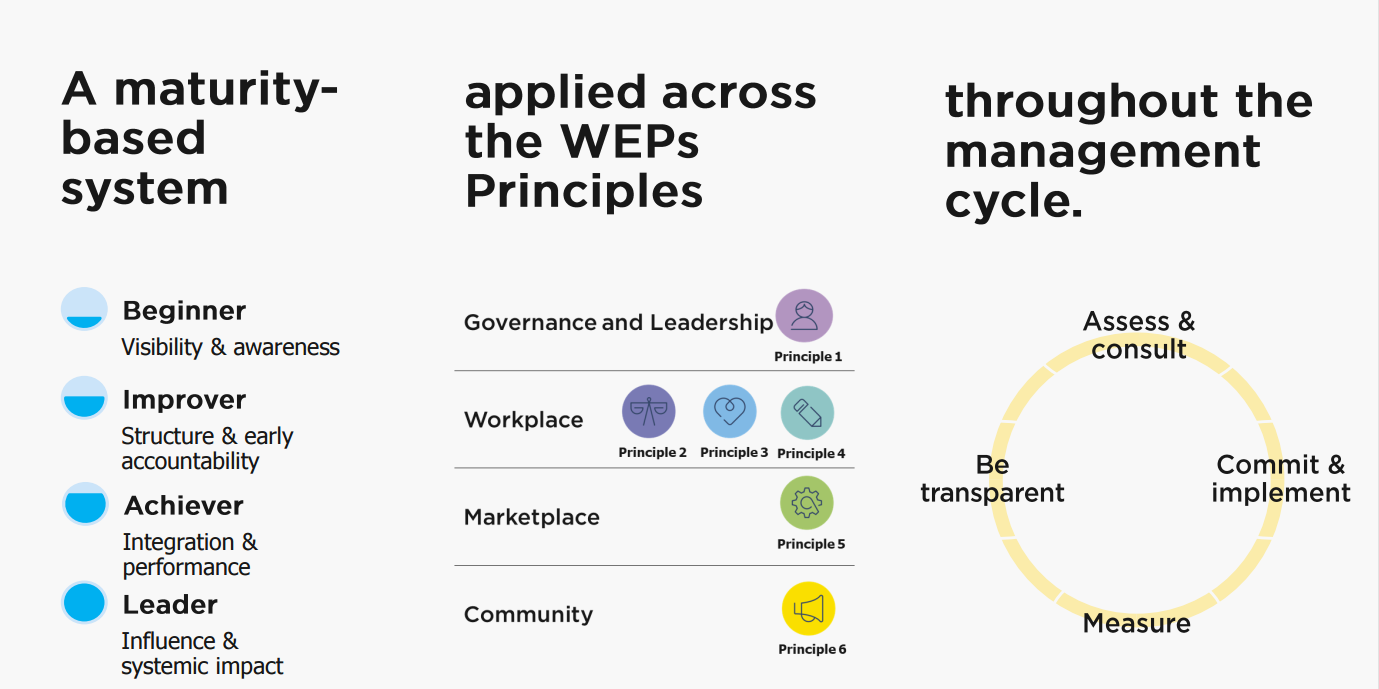
A key feature is the management cycle, which encourages companies to:
- Assess and consult stakeholders
- Commit through policies and strategies
- Measure progress using defined indicators
- Ensure accountability and use data for decisions
- Communicate transparently
This system-wide approach ensures that gender equality is integrated into governance, strategy, and performance management.
Key Challenges Faced by Companies
Interactive discussion during the session revealed common barriers faced by organizations, including workplace culture, unconscious bias, lack of awareness, and limited tracking systems. Many companies reported strong commitments but difficulties in linking actions to measurable outcomes.
The roadmap provides structured guidance on building systems rather than isolated initiatives. It highlights that sustainable progress requires aligning culture, strategy, and data.
How the WEPs Roadmap Supports Solutions
The roadmap offers companies a pathway to move from fragmented actions to integrated systems. It helps organizations:
- Establish clear governance and accountability roles
- Define measurable targets aligned with business strategy
- Build data systems that track outcomes, not only activities
- Use evidence to inform decision-making
- Strengthen internal and external transparency
Importantly, it complements other WEPs tools, such as gender gap analyses and action plans, rather than replacing them.
Five Action Recommendations for Companies
- Build Accountability into Leadership Structures
Involve relevant stakeholders and assign clear responsibilities for gender equality at senior levels and link progress to performance metrics. - Invest in Gender-Disaggregated Data Systems
Develop consistent, integrated data collection that supports decision-making across departments. - Adopt a Maturity-Based Implementation Approach
Start from your organization’s current level and progress step-by-step rather than aiming for rapid, disconnected changes. - Embed Gender Equality Across the Entire Value Chain
Extend efforts beyond the workplace to supply chains, product development, and market engagement. - Strengthen Transparency and Communication
Share progress, challenges, and results internally and externally to build trust and encourage peer learning.
The webinar concluded with a call for collaboration and continuous learning. The roadmap is intended as a living tool, evolving through company feedback and real-world application. By focusing on accountability, transparency, and measurable outcomes, it represents a critical step toward closing the gap between commitment and impact—and accelerating progress on gender equality worldwide.