
When companies talk about gender equality, the conversation often starts inside their own walls—equal pay, leadership representation, workplace culture. But as one recent UN Women webinar revealed, the real test lies elsewhere: in the supply chain.
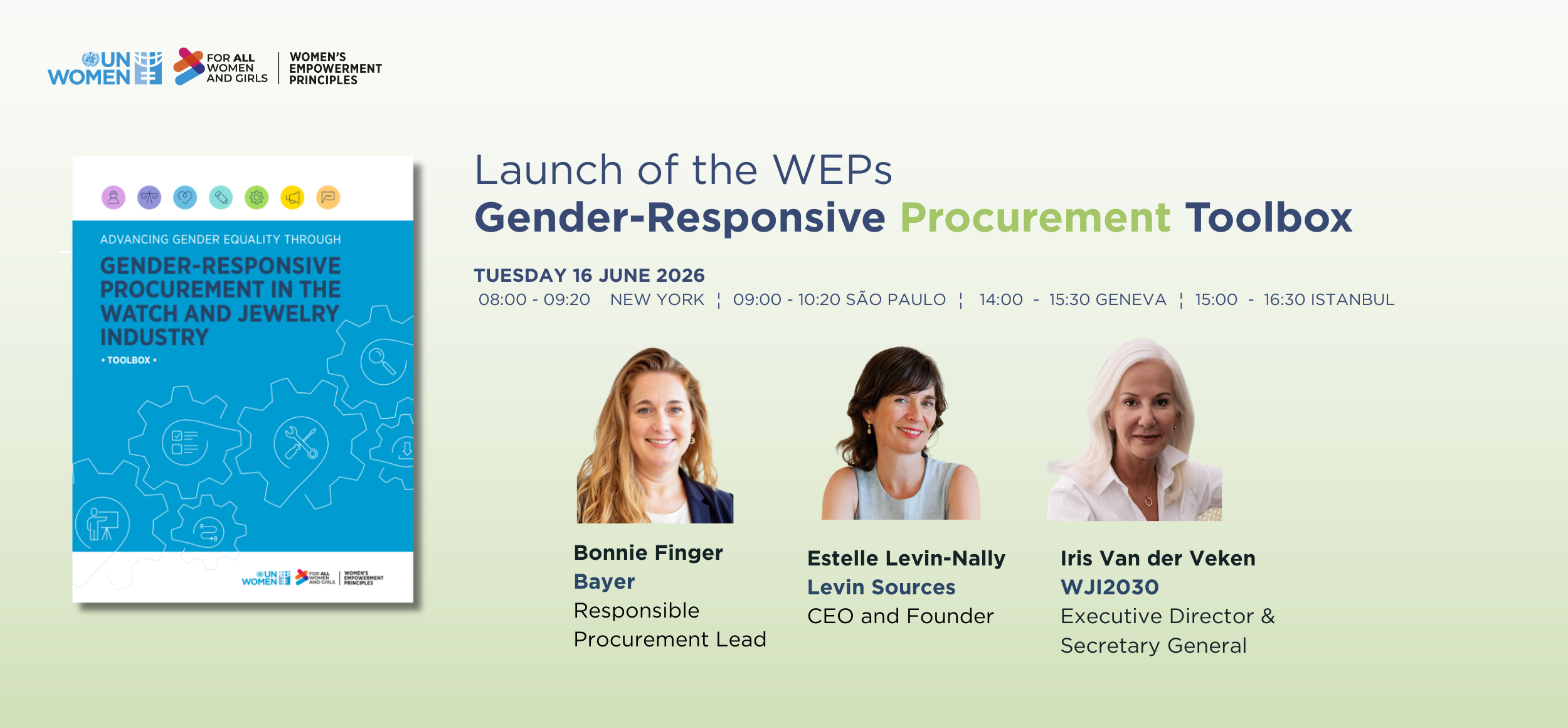
Launching the WEPs Gender-Responsive Procurement Toolbox, the discussion brought together companies and experts to answer one central question—how do you turn commitments into action?
Watch the full webinar recording here.
A hidden lever for change
For many companies, the turning point begins with recognizing where their impact truly sits. “A large part of our environmental and social impact sits in the supply chain,” explains Bonnie Finger, Responsible Procurement Lead at Bayer.
Across sectors—from agriculture to pharmaceuticals—supply chains involve workers, contractors, and entrepreneurs who often face barriers: unequal access to opportunities, unsafe working conditions, and limited pathways to leadership. These are not just social concerns—they directly affect how businesses operate.
Procurement decisions influence up to 90% of a company’s risk exposure, shaping environmental and social outcomes. When gender inequalities go unaddressed, they can lead to workforce instability, lower productivity, and operational disruptions. Conversely, companies that engage gender-responsive suppliers benefit from stronger performance, greater resilience, and more innovative solutions.
At Bayer, this has translated into a shift in mindset. Gender equality, as Bonnie puts it, “is not just a social issue… this is a material supply chain risk.”
Today, Bayer embeds gender considerations into supplier codes of conduct, actively engages women-owned businesses, and invests in supplier capacity building—recognizing that stronger, more inclusive supply chains are also more competitive.
The gap between commitment and practice
Yet across industries, most companies are still at an early stage.
“There are strong commitments to gender equality at corporate level,” says Iris Van Der Veken of the Watch & Jewellery Initiative 2030. “But in procurement, companies are still at a relatively early stage.”
Her work with leading brands revealed a common reality: companies often lack gender-disaggregated data, clear targets, or structured approaches to procurement. As a result, gender equality remains disconnected from day-to-day sourcing decisions.
The shift required is structural. Gender-responsive procurement, she emphasizes, “cannot be something you’re hanging on the side of your business strategy [it must be] at the heart of your organization.”
What supply chains reveal
Nowhere are these gaps more visible than deep in global supply chains.
In mining and jewellery sectors, women play essential roles—but rarely benefit equally. “Women are essential to production… but they are clustered in the least secure, least visible and lowest paid segments,” explains Estelle Levin‑Nally.
Leadership representation remains limited, and safety concerns—including harassment—are widespread. Compounding the issue, many companies lack the data needed to identify risks or track progress.
And yet, the disconnect is stark: in jewellery, approximately 90% of consumers are women, highlighting how far supply chains remain from reflecting their markets.
From insight to implementation
To bridge this gap, companies need practical tools. The Gender-Responsive Procurement Toolbox provides step-by-step support across the procurement lifecycle—from risk mapping and supplier selection to contract clauses, training, and monitoring. It encourages companies to integrate gender criteria into evaluation processes, embed expectations into contracts, and engage suppliers through capacity building.
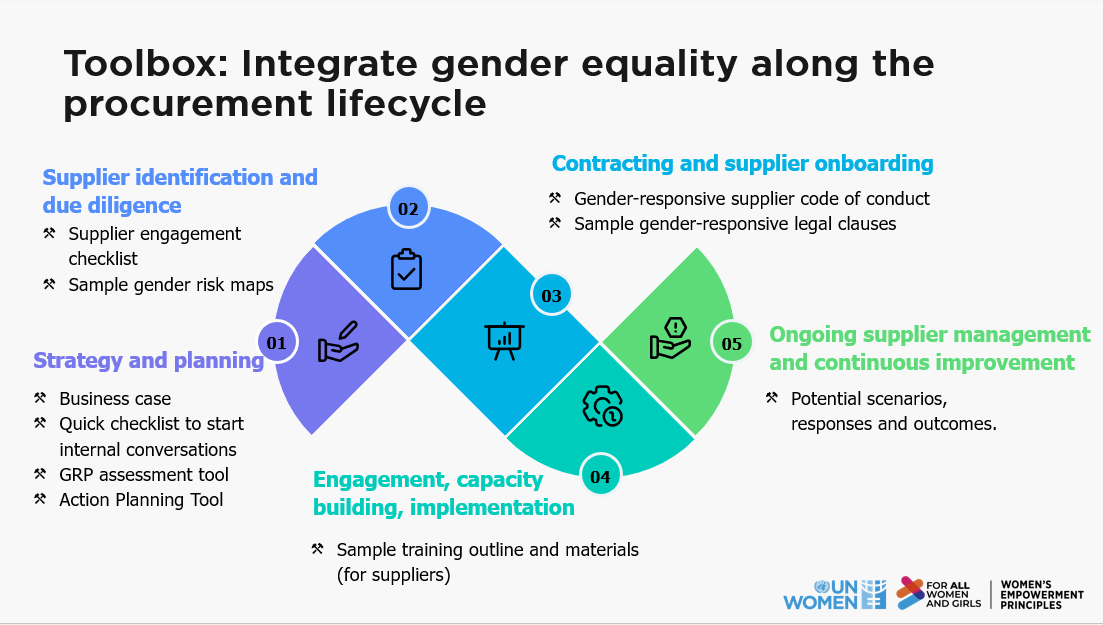
Structured approaches, such as a 90-day implementation journey, help companies move from internal alignment to supplier engagement in a phased way.
At its core, the message is simple: if gender equality is not built into procurement systems, it will not be reflected in procurement decisions.
A case for collective action
But companies cannot act alone.
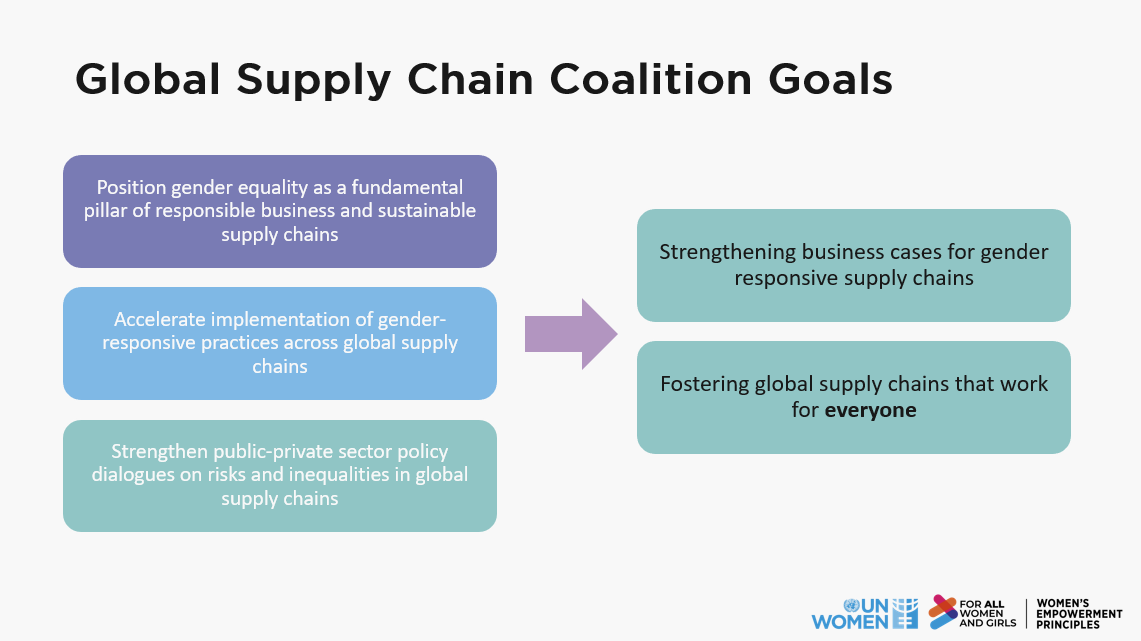
Mihwa Park introduced the Global Supply Chain Coalition as a response to this challenge—a platform for companies to collaborate, align standards, and drive systemic change. Rather than focusing only on sourcing from women-owned businesses, the coalition looks at how companies manage suppliers overall—through governance, due diligence, and performance monitoring.
The aim is to create smarter, more sustainable and resilient supply chain networks through shared learning and collective action.
Five actions for companies
Across the discussion, five priorities emerged:
- Embed gender equality into procurement strategy
- Strengthen data systems and track gender indicators
- Build supplier capacity through training and mentoring
- Set measurable targets and monitor progress
- Collaborate through industry platforms to scale impact
Ultimately, gender-responsive procurement is not an add-on—it is a transformation.
As Iris Van Der Veken emphasizes, this is not a “soft topic,” but “a strategic imperative for about business resilience and stronger supply chains.”
Event Speakers
Estelle Levin-Nally, CEO and Founder, Levin Sources
Bonnie Finger, Responsible Procurement Lead, Bayer
Anna Falth, Global Head, UN Women
Iris Maria Alexis Van der Veken, Executive Director & Secretary General of the Watch & Jewellery Initiative 2030
Alexandra Carter, WEPs Coordinator, UN Women
Mihwa Park, GSCC Coordinator, UN Women