
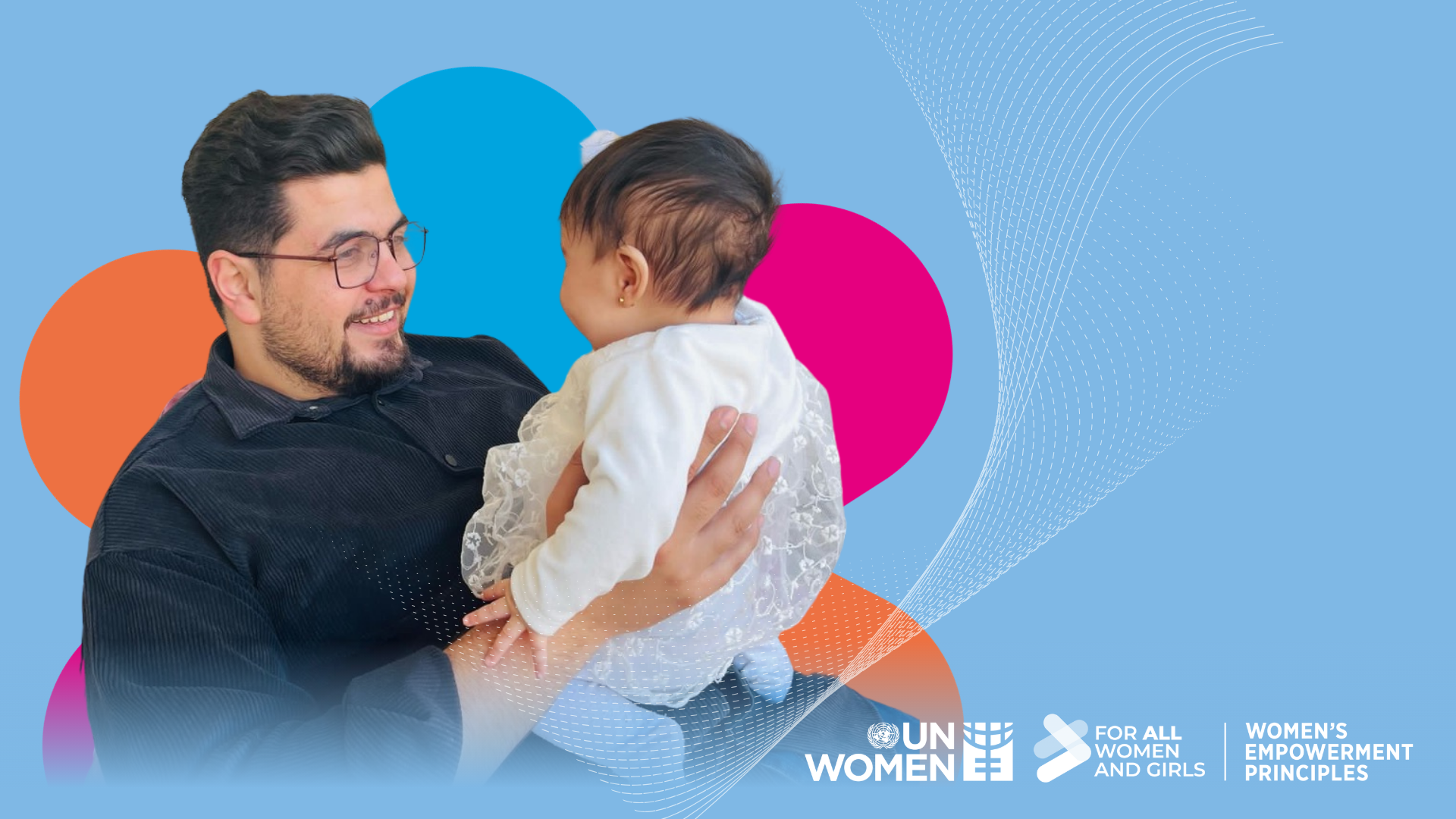
Jordanian law grants new fathers three days of paternity leave. MEHNA, a Jordanian manufacturing company and WEPs Signatory decided to go much further for new fathers. MEHNA extended parental leave to three weeks, six times the legal minimum. A single family-friendly policy shifted workplace culture and supported gender equality at the same time.
MEHNA employs 16 people. Four are women, and they hold roles that shape the business directly: Plant Manager, Warehouse Supervisor, Financial Manager, and Department Coordinator. These positions carry real decision-making power over operations and finances.
This kind of representation in leadership – that tracks higher than the national average – depends on deliberate policy choices, not chance. Companies that want similar outcomes typically combine several practices: equal hiring opportunities, technical training designed for women, leadership development programs, flexible work arrangements, and genuine inclusion of women in innovation and process decisions.
Amina Mari, Founder and CEO, MEHNA shared more on those deliberate choices: "Extending paternity leave was not a benefit we added, it was a statement about the kind of workplace we want to build. When a father is given the time to be present with his family, he returns with more focus and more loyalty, and the whole team sees that this company values the human being behind every professional role."
In Jordan, women’s labour force participation rate is among the lowest globally at just 17.6% for women aged 25-54. With support from UN Women, 283 companies employing over 90,000 people have adopted the WEPs in the country. Within one year, 97% introduced flexible work arrangements, family-friendly policies, mentorship and career development opportunities.
Gender diversity strengthens business performance in measurable ways. Companies in Jordan that adopted the WEPs reported broader business benefits: 57% noted an improved reputation and brand value after joining the WEPs, 51% enhanced employee engagement, and 30% increased market access and growth. Companies that prioritize women's empowerment also tend to score better on ESG standards, which matters increasingly to investors and international partners who weigh social responsibility in their decisions.
MEHNA made a deliberate policy choice: they extended parental leave for fathers to three weeks, six times the legal minimum.
Mohammed Khaled, an engineer in MEHNA’s Engineering Department, took the full three weeks and describes the impact in personal terms: "This experience showed me that paternity leave is much more than an employee benefit; it is a genuine reflection of a workplace culture that values people, understands the importance of family, and recognizes the essential role of fathers during the first weeks of parenthood."
The time let him support his wife physically and emotionally, bond with his newborn, and take an active role during the most demanding early weeks of parenthood. He returned to work more focused and more motivated, a pattern he has also observed in colleagues who took the same leave.
The effects extend beyond individual families. Employees who feel supported as whole people, not just as workers, tend to stay longer and contribute more. Extended leave signals that a company values family needs, and employees notice.
Perhaps the clearest sign of change in the office is that male colleagues now ask each other for advice about paternity leave, covering not just paperwork but how to prepare emotionally for fatherhood. Conversations about family responsibilities no longer factor in a professional cost.
MEHNA’s example shows that meaningful progress on gender equality does not require a large company or a large budget. It only requires commitment: extending a benefit beyond the legal minimum, backing it with training and flexible policies, and trusting employees to balance their roles as professionals and as parents.
Other companies looking to advance gender equality and build stronger, more loyal teams do not need to start from scratch. They can start with workplace policies that go far beyond what the law requires, and make a statement about the kind of workplace they want to build.