
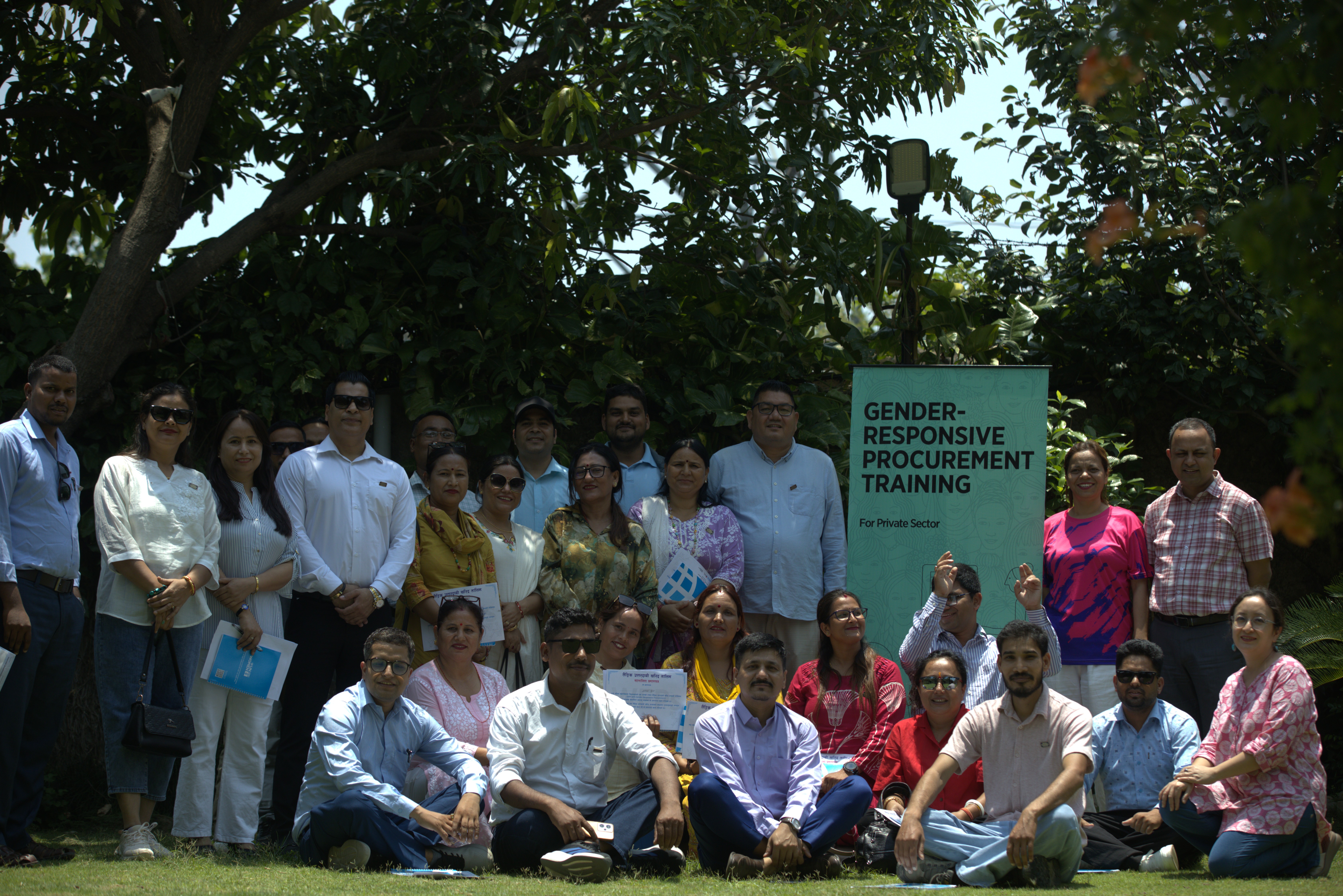
The EU–UN Joint Programme Empowered Women, Prosperous Nepal (EWPN), in collaboration with private sector associations, convened businesses, private sector leaders, cooperatives, and aggregators in Madhesh, Sudurpaschim and Karnali provinces for a Provincial Workshop on Gender-Responsive Procurement (GRP) — with one shared goal: markets that include women aren't just more equal, they're more effective.
Women are producing, trading, and building enterprises across these provinces — yet procurement systems rarely reflect that reality. GRP is the bridge between gender equality as a principle and gender equality as a practice. Evidence is clear: supply chains that intentionally include women-owned businesses deliver stronger outcomes for everyone.
Aligned with the Government of Nepal's 100 Action Points on Women's Economic Empowerment and UN Women's Women's Empowerment Principles (WEPs), this agenda calls on businesses to go beyond policy — and put inclusion into procurement decisions that shape who gets to grow.
The GRP training generated strong participant ownership and readiness for GRP implementation. The participant committed a balanced approach that combines internal organizational reforms with external supply chain interventions. Internally, participants committed to improving workplace inclusion through employment generation, safe working environments, leadership opportunities, and employee support systems.
Externally, participants committed to strengthening procurement from women-owned businesses, diversifying supplier networks, and expanding market opportunities for women entrepreneurs.