

The Global Supply Chain Coalition was officially launched at COP30. The Coalition is a partnership between UN Women and the German federal Government aimed at making global supply chains gender-inclusive and sustainable. The coalition builds on the Women's Empowerment Principles framework, which currently guides over 12,000 companies worldwide.
The launch event took place in Belém, Brazil on 15 November at the COP30 German Pavilion. The event was co-organized by the German Agency for Business and Economic Development (AWE), the German Renewable Energy Federation (BEE) and UN Women.
The coalition was launched at COP30 to highlight the importance of building a sustainable workforce for a just transition. The event emphasized one simple truth last Saturday: the global energy transition cannot succeed without people — as the world strives to triple renewable capacity by 2030, labour shortages and persistent gender gaps threaten to slow progress.
Susanne Friedrich, Director of the German Agency for Business and Economic Development opened the event: “As we gather here at COP30, we are reminded that climate action and gender equality are inseparable. We cannot achieve a just and sustainable transition without the full participation and leadership of women”.
UN Women Brazil’s Ana Carolina Querino emphasized the potential – global – impact of this partnership: "When women participate equally in supply chains, productivity increases, innovation flourishes, and resilience grows, risk decreases, reputations improve, and communities thrive."
That is why this global coalition is not only a coalition for equality. It is a coalition for smarter and more sustainable business.
A roundtable discussion identified some of the main barriers the global supply chain faces. The panel emphasized that gender equality isn't just about representation: it's about innovation, better governance, and creating a truly just energy transition. Solutions must be decentralized and localized rather than concentrated in urban centers.
The Global Supply Chain Coalition enables companies and their supply chains to go beyond compliance by providing a clear pathway to integrate gender equality across entire industries.
Some barriers discussed were of societal and cultural nature. Rosana Santos, Executive Director at E+ Energy Transition Institute shared how women face a confidence gap where they stop believing in their advancement potential, an issue often exacerbated by marriage or pregnancy. This "imposter syndrome" is prevalent, causing women to underestimate their abilities. Santos explained: "you do have brilliant women in the starting levels of the careers... brilliant girls that at some point stop believing that they can”.
Women remain significantly underrepresented in future-oriented sectors, particularly in technical and leadership roles. Workforce data illustrates where those gaps lie. According to shared data from IRENA: only 32% of renewable energy jobs are held by women (unchanged since 2019), dropping to 28% in STEM roles and just 19% in leadership positions.
There are also regional disparities – as well as rural vs urban – to consider. In countries like Brazil, women in rural northern/northeastern regions (where most of the renewable energy is generated) face greater barriers than those in urban centers.
Panelists presented several solutions that demonstrated the role the private sector can play in building a more inclusive workforce.
Karolina Gutiez, Senior Manager of Communication, Institutional Relations and Sustainability at Schneider Electric, shared their approach: The company has trained 1 million people globally in energy skills since 2009, with dedicated programmes for women. They set targets of 50% women in hiring, 40% in management, and 30% in leadership and have successfully achieved over 30% in executive committees.
Empower Brazil's strategy, according to their founder Eduarda Zoghbi began with surveys to understand specific barriers and went on to create leadership programmes addressing skills gaps. Zoghbi emphasized the importance of networking for young women entering the sector.
The panelists agreed that large companies must support smaller suppliers with guidance, resources and knowledge to achieve goals within diversity throughout the value chain. Gutiez emphasized the responsibility of the private sector – the big companies – to look at their value chains because the small- and medium-sized companies don't always have the market influence, tools or the resources to drive change.
By leveraging collective procurement power throughout the supply chain, the Global Supply Chain Coalition can ensure women have equal access to the education, jobs, and leadership roles shaping our economic and environmental future.
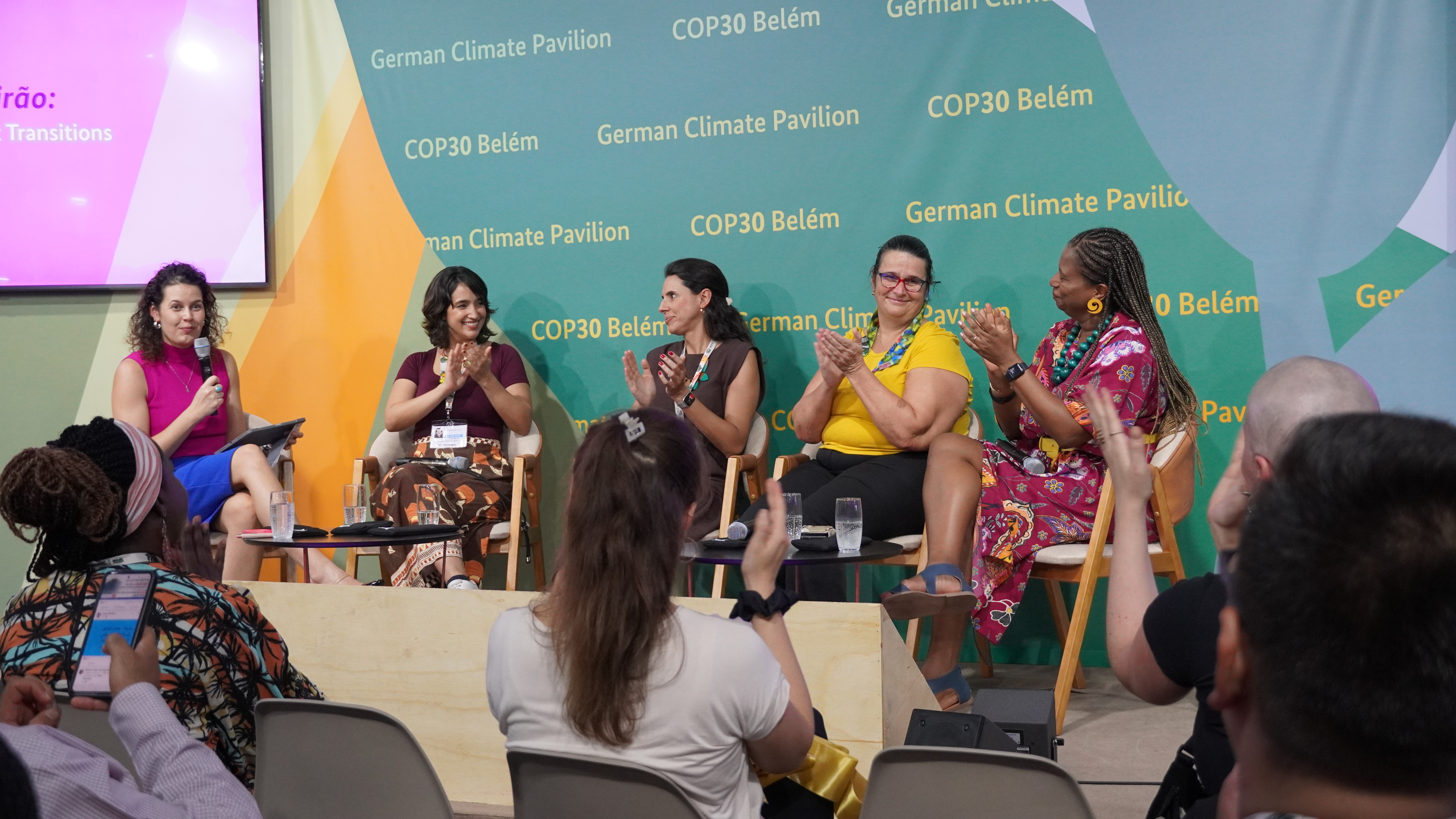

(Photo credit: UN Women Brazil)